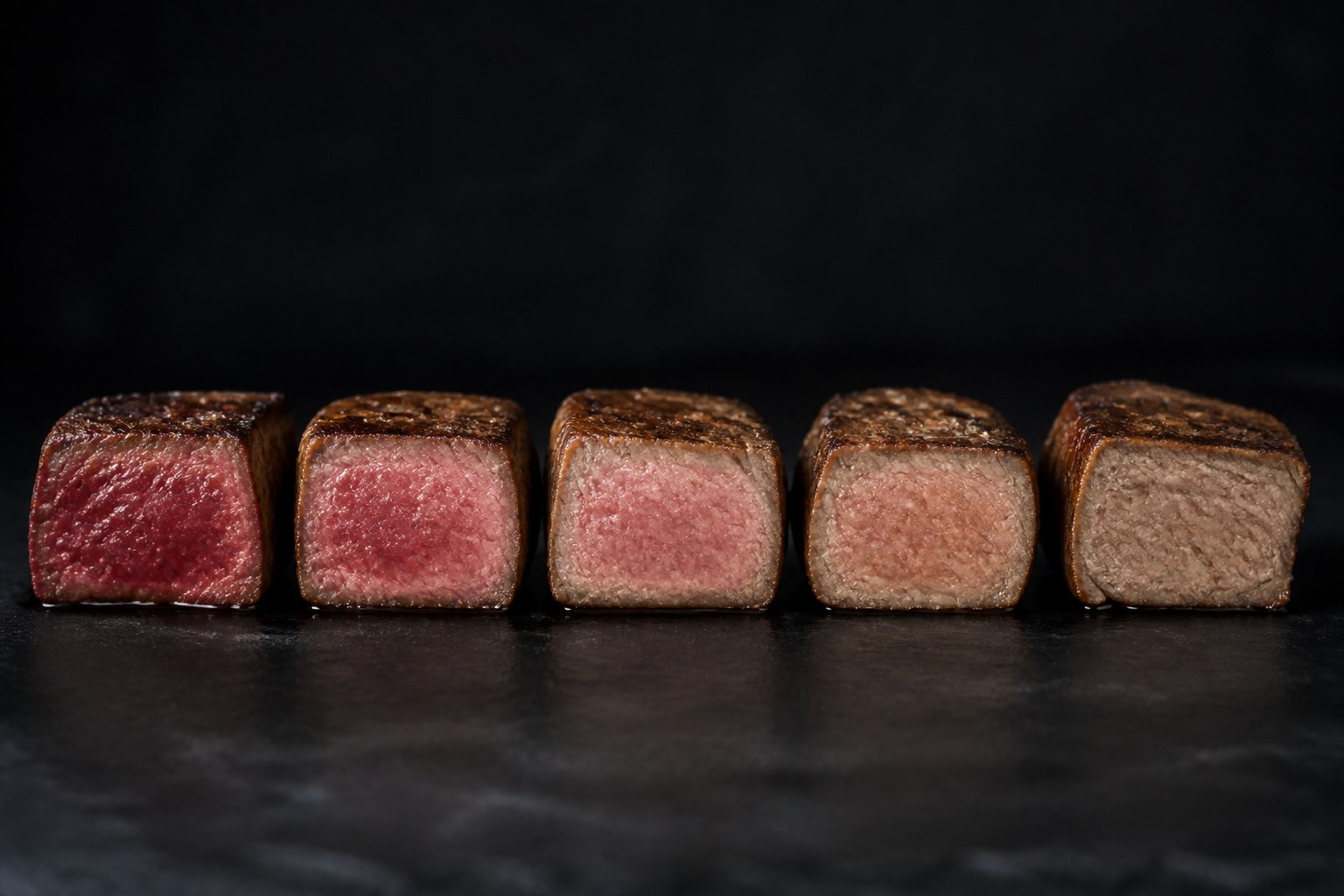
The Complete Steak Temperature Guide for LongHorn
Temperature clarity is what separates a good plate from a send-back. Order medium rare (130–135°F) for ribeyes and strips, and medium rare to medium for filets. That is where the crust-to-juice ratio usually works. Thick Outlaws can take 20+ minutes on a busy night.
Last updated: August 2026
Temperature Chart: Rare → Well Done
Rare
120–125°FCool red center, soft texture. Best for filet cuts.
LongHorn pick: Flo's Filet — order rare for maximum tenderness
Medium Rare
130–135°FWarm red center, the steakhouse standard. Juicy with a firm crust.
LongHorn pick: Outlaw Ribeye, New York Strip — chef recommended
Medium
140–145°FPink center throughout. Good balance of juice and firmness.
LongHorn pick: Renegade Sirloin, T-Bone — ideal for leaner cuts
Medium Well
150–155°FSlight pink, mostly brown. Drier but still flavorful.
LongHorn pick: Porterhouse if you prefer less pink in the strip side
Well Done
160°F+Fully browned, no pink. Firm throughout.
LongHorn pick: Any cut — request butter baste to retain moisture
| Cut | Best Temp | Why |
|---|---|---|
| Flo's Filet | Medium rare | Tenderness peaks; overcooks dry fast |
| Outlaw Ribeye | Medium rare | Marbling needs warmth to render |
| Renegade Sirloin | Medium | Leaner — rare can feel chewy |
| New York Strip | Medium rare | Classic steakhouse bite |
| Porterhouse / T-Bone | Medium rare | Protects the filet side |
Ordering notes
- Thick Outlaws need time — ask for an ETA when you order.
- "Medium rare plus" is a real request; kitchens understand it.
- Well-done ribeyes waste the marbling — pick sirloin instead.
- Butter baste helps well-done orders stay edible.
Honest Caveat
Busy Friday nights stretch cook times and consistency. If temperature is non-negotiable, go early weekday or ask the server which grill cook is on the fire.